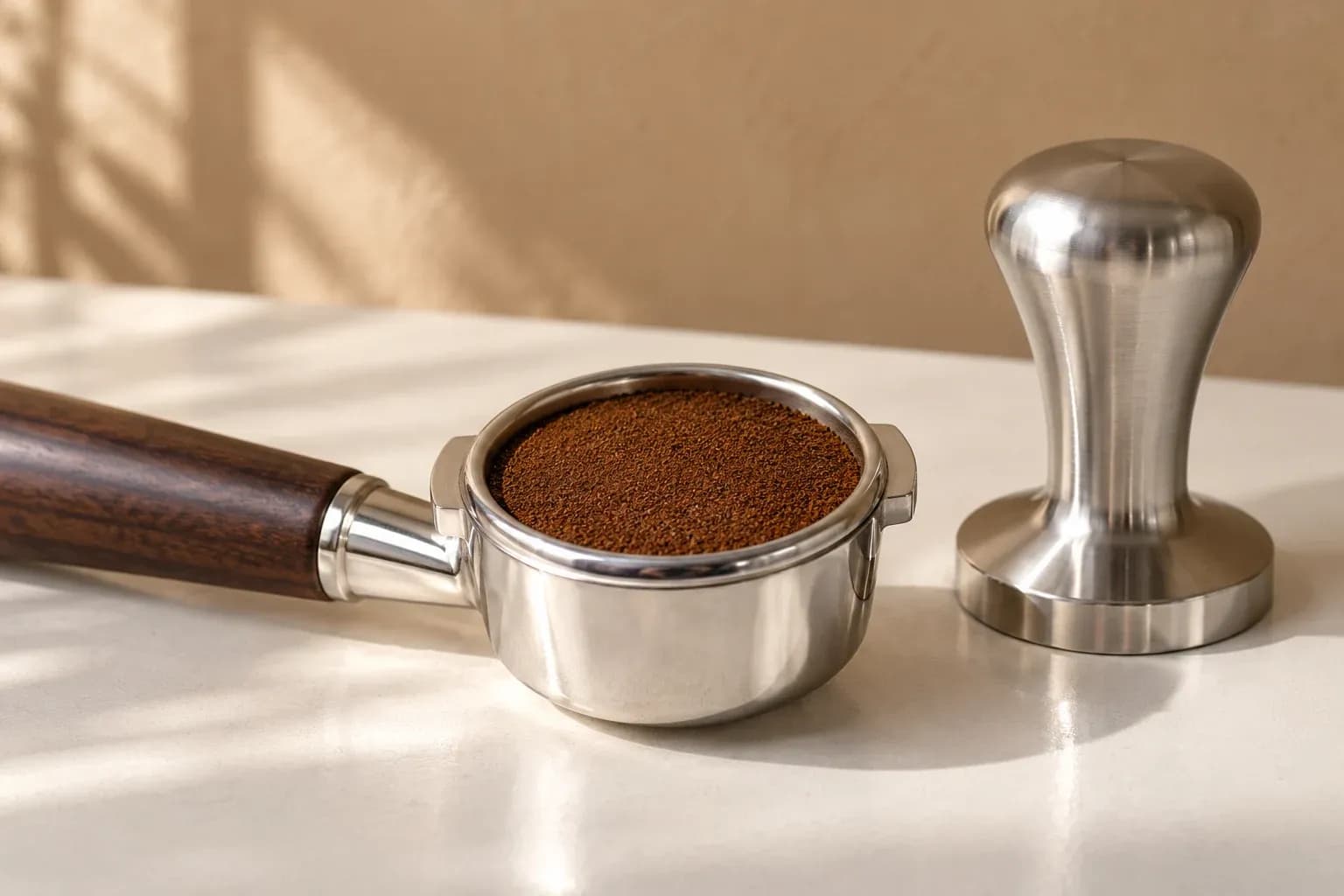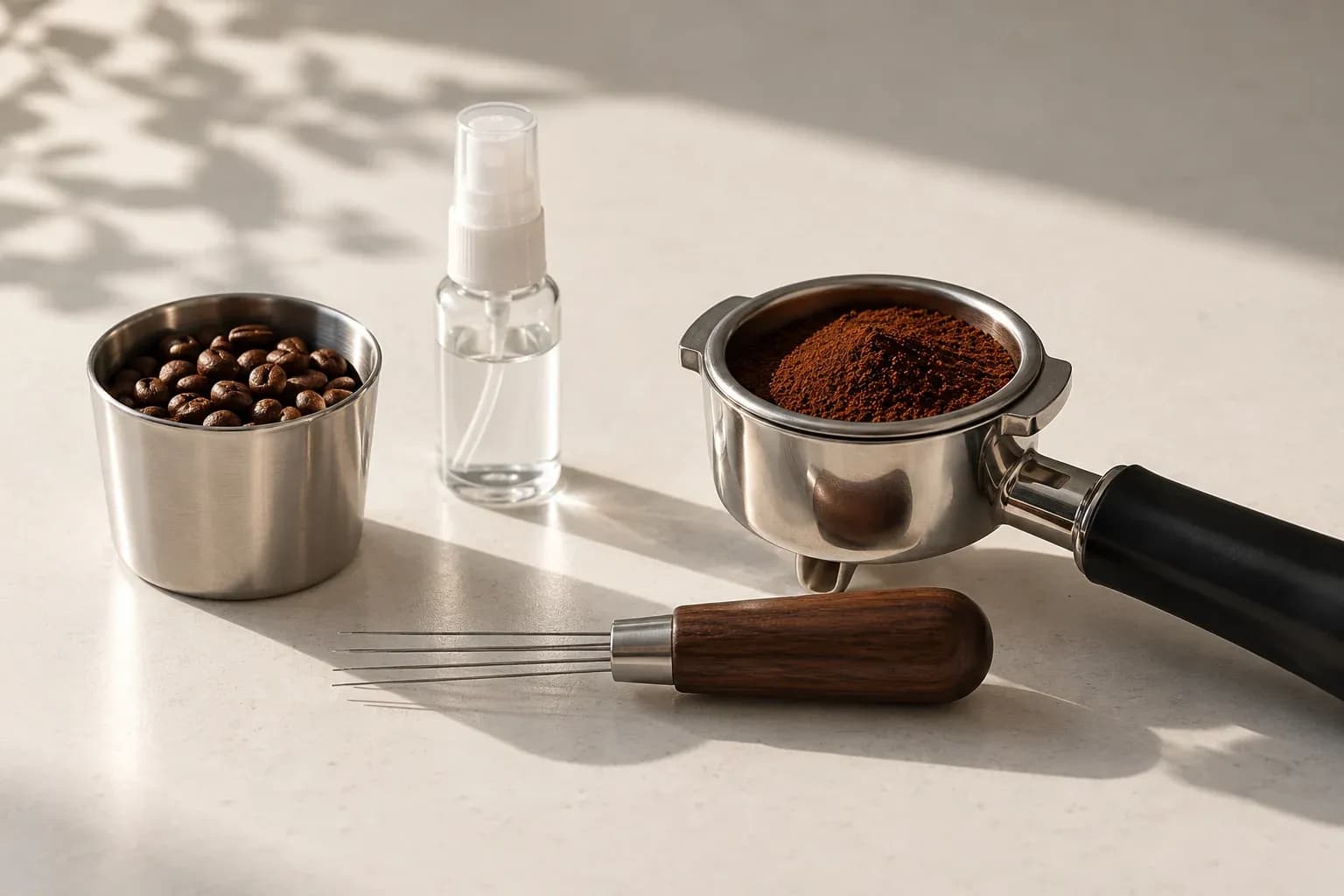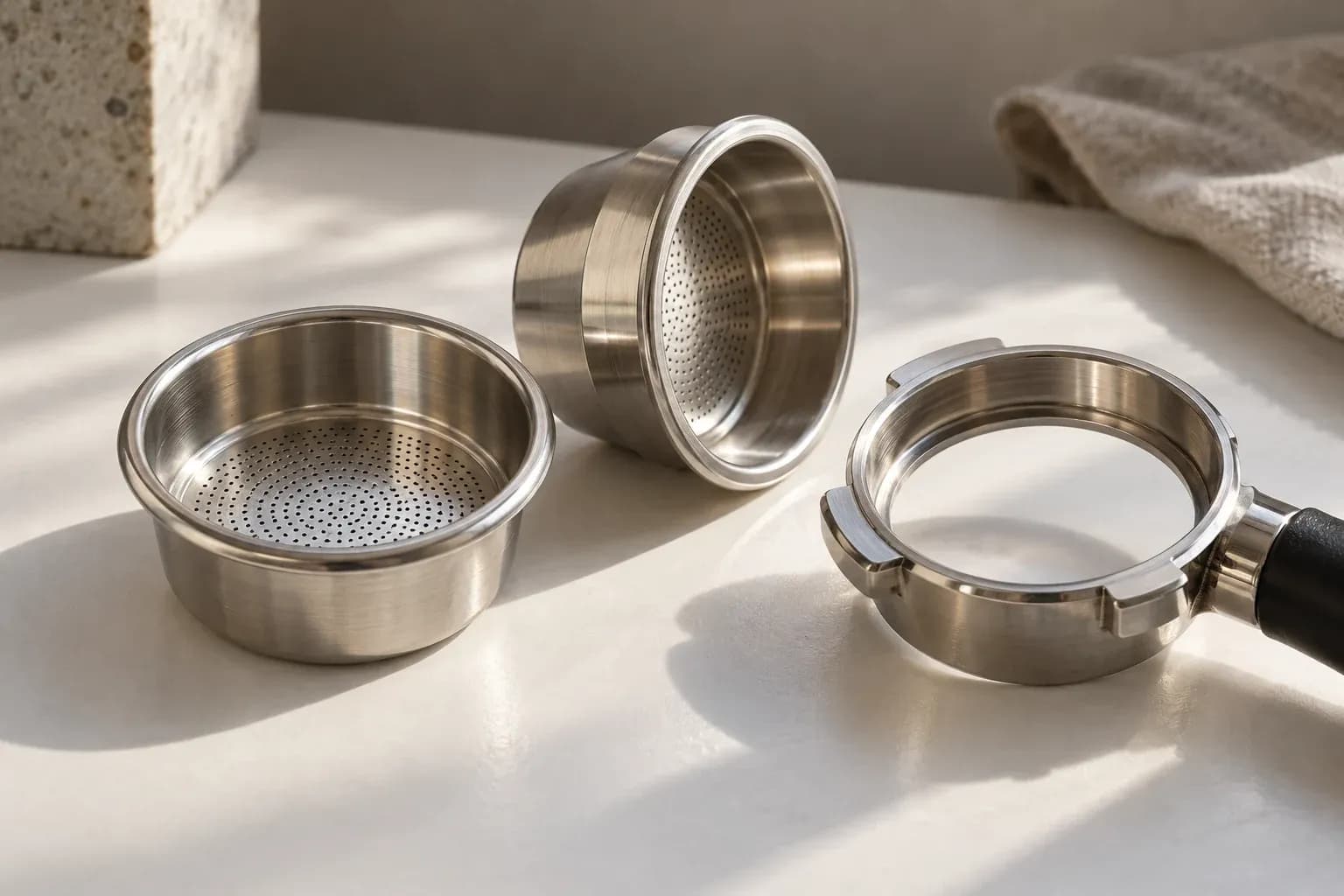
You put a different basket in the portafilter, keep the grinder where it was and pull an espresso. It runs much faster. The immediate temptation is to call the new basket less restrictive, more efficient or simply worse. All you know so far is that changing the basket changed the behaviour of that recipe.
A basket shapes the bed and provides its exit path. Replacing it can alter the dose it accommodates, bed depth, available hole area and fit with your tools. A useful comparison starts by deciding which of those conditions you will hold fixed, and which you will allow to change.
Fit comes before flavour
A nominal diameter is only the first check. The basket must fit the portafilter body, be retained as intended and leave enough depth beneath it. The tamper must also match the manufacturer's working dimensions. A basket that looks compatible from above may be too deep for a particular portafilter or unsuitable for the tamper you own.
Check whether the basket is designed for your machine and whether it is a conventional non-pressurised basket or a pressurised design. A pressurised basket controls the outlet differently, so it should not be treated as a straightforward hole-pattern swap within the same comparison.
Inspect the rim and holes for damage or obstruction. Follow the maker's cleaning procedure rather than enlarging holes or forcing a sharp object through them. A blocked basket and a clean basket are different starting conditions, regardless of their specifications.
Geometry changes more than the number of holes
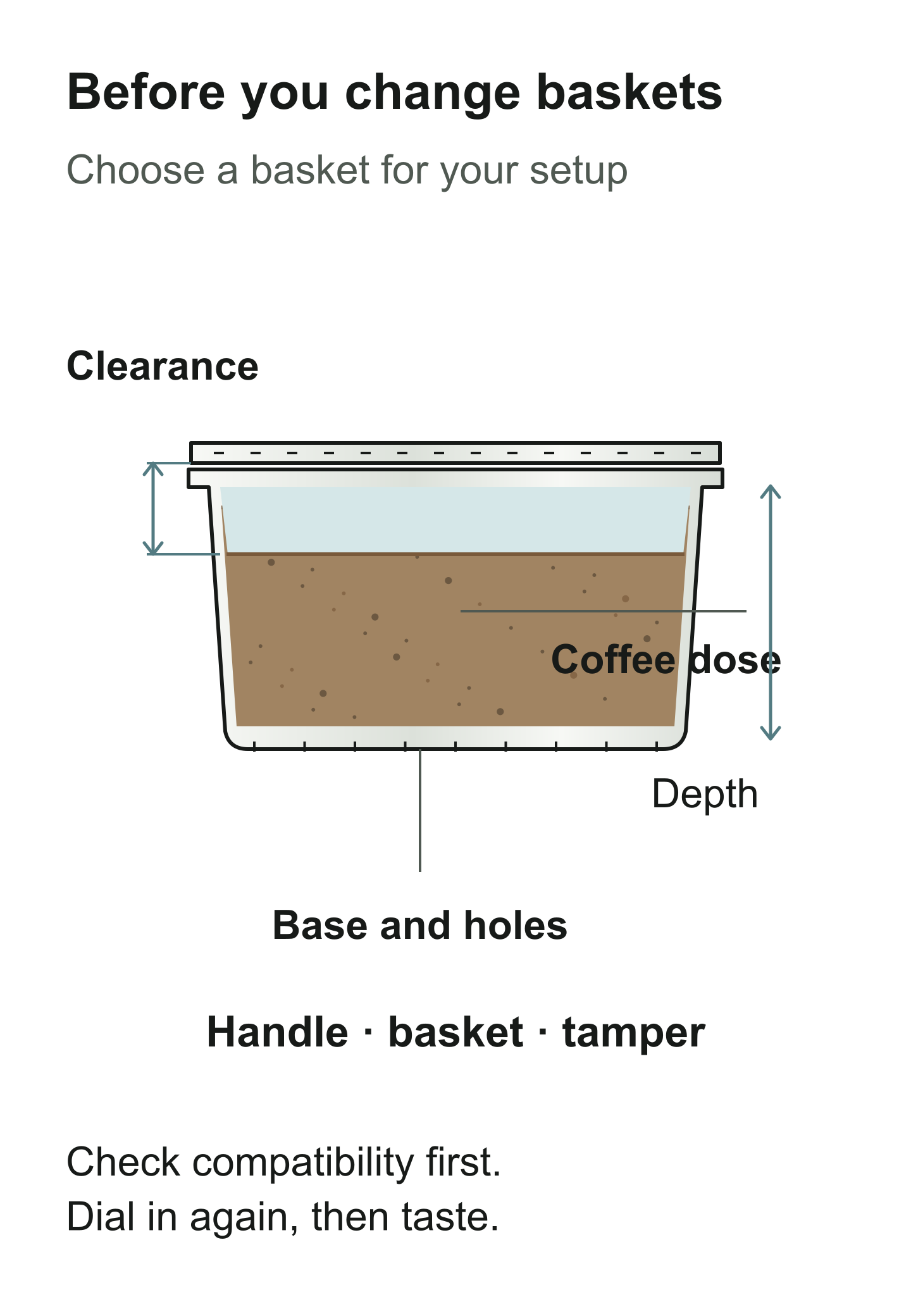
At a fixed dose, a different internal shape can create a different bed depth and contact with the wall. Hole size, placement and total open area can affect how liquid leaves the bed. These features work together with grind and preparation; none supplies a stand-alone flavour score.
More holes do not automatically mean a sweeter espresso. Faster flow does not prove more uniform extraction. A basket that supports a recipe you like may still need a different grind from the basket it replaces. Marketing terms such as high extraction are not a substitute for an actual recipe and a cup you can assess.
The nominal gram rating is a dosing guide for that design, not a promise that every coffee fills it identically. Roast and grind can change how much space a given mass occupies. Two baskets marked with the same dose may not leave identical headspace with your coffee.
Headspace is a physical constraint
Headspace is the clearance above the prepared puck before brewing. It matters because the basket, coffee bed and shower assembly must fit together as intended. Use the machine and basket manufacturers' guidance to select the dose and check clearance; do not assume that a fixed gram number is suitable everywhere.
An overfilled basket can bring the dry puck into contact with the shower assembly or make locking in the portafilter difficult. Reducing the dose may be the right setup correction, but it also changes the recipe. Record it instead of presenting the next shot as an equal-dose basket test.
The appearance of a used puck is not a precise clearance gauge. Wet grounds change during brewing, and machine drainage affects what remains. A soggy puck alone does not prove that the basket is wrong or that the espresso was poorly extracted.
Two comparisons answer two different questions
A fixed-recipe comparison asks what happens when you substitute one compatible basket at the same dose, grind and beverage target. It is useful for identifying how much the workflow changes. It does not necessarily reveal the best cup either basket can produce.
A separately dialled-in comparison asks what each basket can do at an appropriate dose and adjusted grind. This is more useful for deciding which setup you want to use, but differences can no longer be attributed to basket geometry alone. You are comparing two complete recipes.
Choose the question before testing. If you begin with a fixed recipe, then change dose and grind for just one basket, the result mixes both questions and is difficult to interpret.
A practical sequence for the first comparison
Use baskets with an overlapping recommended dose range, suitable clearance and compatible tools. For illustration, if both support 18 g, you might keep that dose and stop at 36 g of beverage. These numbers describe a possible test, not a required espresso ratio.
Keep the coffee, grinder setting, distribution, level tamp, temperature setting and machine warm-up routine consistent. Alternate baskets and repeat the comparison. Weigh the actual basket dose and beverage. Record time and a brief note on sweetness, acidity, bitterness, texture and finish, using the same few descriptors for both cups.
Compare at a similar drinking temperature. If possible, ask someone to label the cups without telling you which is which until after tasting. That reduces the influence of appearance, price or the expectation that the newer basket should win. It does not turn a small home comparison into a laboratory study, but it makes your decision more grounded.
Dial in the chosen setup for the cup you want
If a compatible new basket repeatedly runs faster at the same recipe, try a finer grind while keeping dose and beverage target stable. Change one setting, then taste. Do not grind finer merely to reproduce an old number on the timer if the cup has already become less enjoyable.
If results are erratic, inspect fit, dose, distribution and tamp alignment before making large grind swings. If the cup tastes balanced but too concentrated, consider beverage ratio rather than assuming the basket needs replacing. The guide to brew ratios explains why strength and extraction require different decisions.
Keep the basket that gives you a useful combination of taste, repeatability, cleaning and fit with your usual dose. A change that requires constant corrections may be inconvenient even if it once produced an excellent shot. Your notes should tell you why you kept it, not simply that its first shot ran longer or its holes looked more precise.